
When people speak of the “candle power” of the stars, they’re invoking an old measure of brightness that compares light sources to the glow of a single

It would take 3.8 octillion candles like these to equal luminosity of the sun.
standard candle. Before modern units like the lumen or candela existed, astronomers and engineers alike tried to imagine how many candles it would take to match the brilliance of various celestial bodies. Though this comparison is quaint today, it’s still a vivid way to picture the staggering range of brightness in the night sky.
Take our Sun as an example. By old-fashioned reckoning, it would shine with roughly 4 × 10²⁷ candlepower—that’s a 4 followed by twenty-seven zeros, an almost unimaginable quantity of light. Even the brightest star in the heavens, Sirius, pales in comparison: its light, when it reaches us, would amount to just a few dozen candles seen from a thousand kilometers away. The dimmest stars visible to the naked eye are millions of times weaker still. What unites them is that their faintness is simply the result of distance: even the weakest-looking star can be a blazing sun, tens or hundreds of times brighter than ours, viewed from light-years away.
In modern astronomy, we no longer speak of “candlepower” but of luminosity
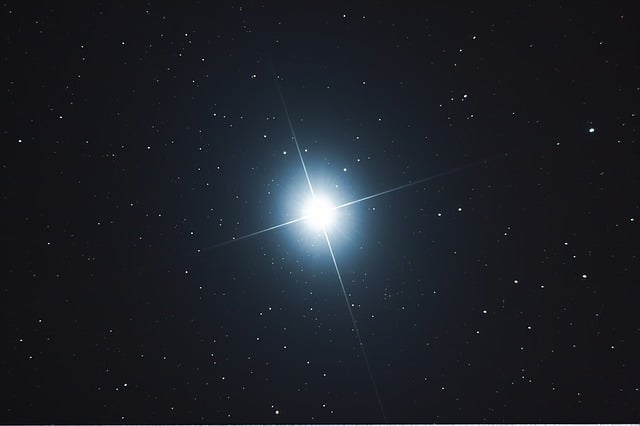
25 time as many candles than the sun would be needed to equal the luminosity of Sirius.
(the total energy a star emits) and apparent magnitude (how bright it looks from Earth). The ancient language of candles, however, captures something that pure numbers sometimes miss—a human sense of wonder. It’s a reminder that the stars, however faint, are not mere points of light but colossal furnaces scattered through an immense dark,

each one outshining any man-made flame. To measure them in candlelight is to bring their grandeur down to human scale, if only for a moment.